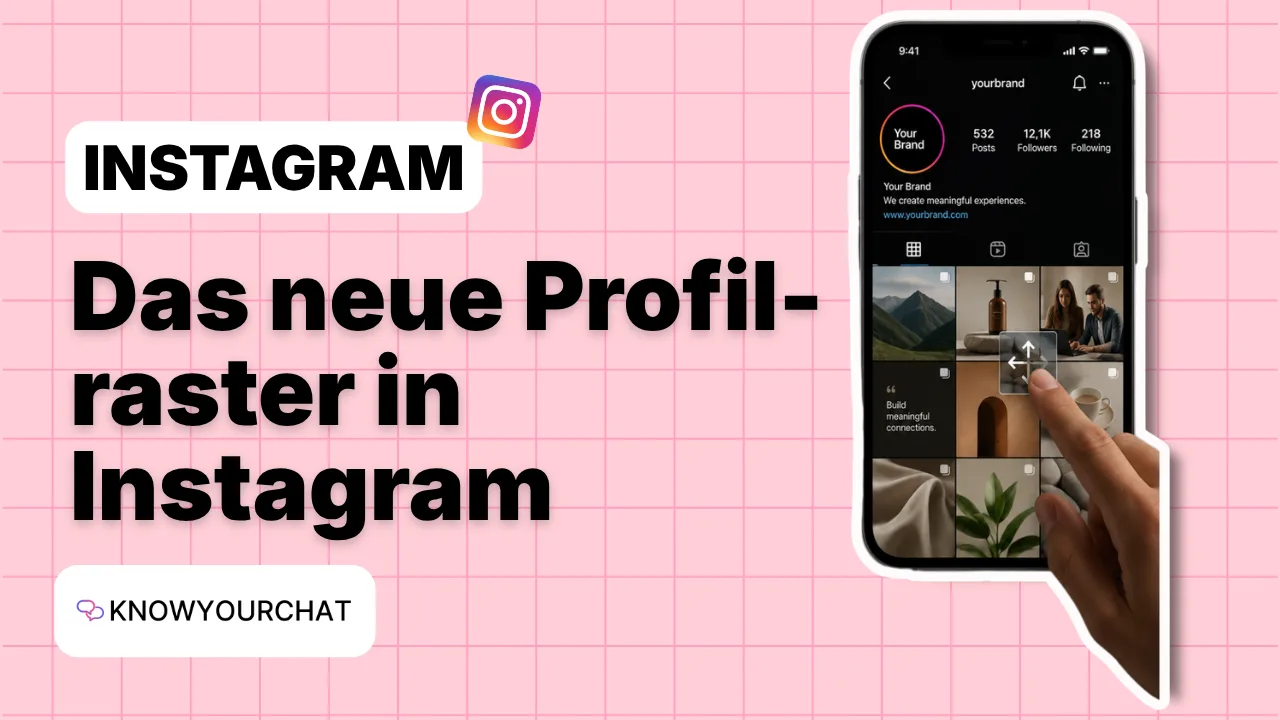

“Finally.” That was all Instagram head Adam Mosseri wrote in early June 2026 when the company announced the global rollout of the new Grid Reorder.
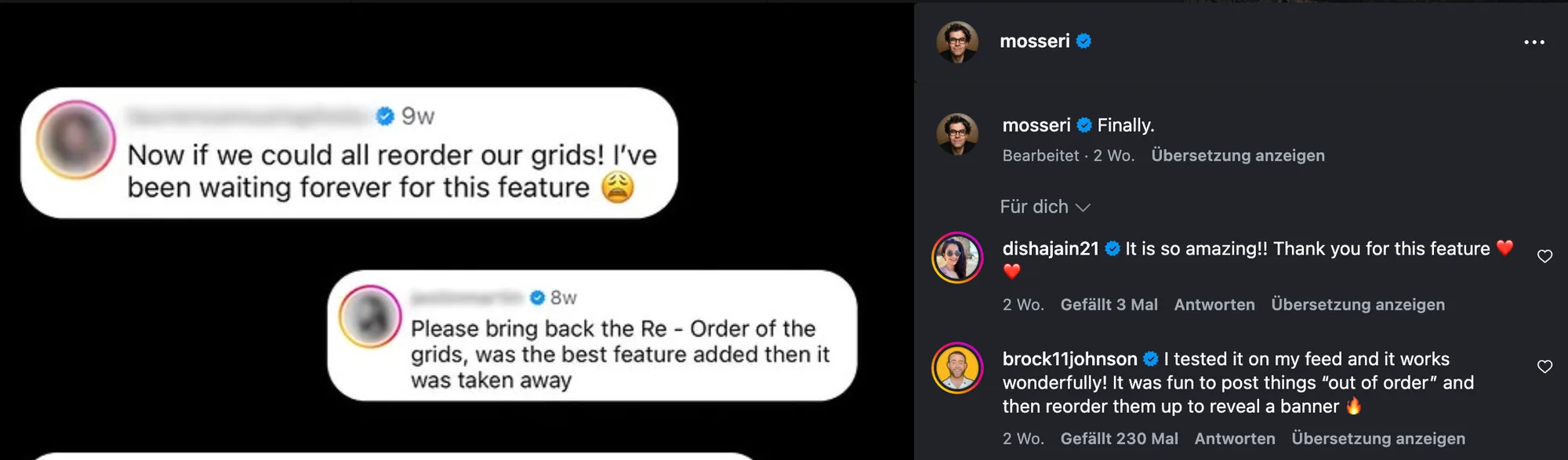
For years, creators, companies and social media managers had wanted more control over their Instagram profile. Pinning up to three posts had been possible since 2022 and offered some first design options. For the order of all other content, however, a simple rule still applied: it was based solely on the publication date. If you wanted to build your profile strategically beyond that, you had to archive posts, republish them or make compromises. With the rollout in early June, that has changed.
More interesting than the feature itself is the question of why Instagram is taking this step right now. New features rarely come about by chance. Usually, platforms introduce them in response to changing user behavior. That is exactly what can be seen with the new option to freely rearrange your profile.
The Instagram profile has a new job
When people discover a company on Instagram today, they rarely get there directly through its profile. The first touchpoint is often a Reel, a single post, a comment or a search within the platform. Only then is the profile opened. That is exactly where a decision is made within a few seconds: Do I follow this account? Do I want to learn more? Or do I close the profile again?
These few seconds have become more valuable for companies than ever before. In the past, the customer journey often began on the company website. That is where services were explained, references presented and trust built. Today, social media profiles take on a large part of this job. They convey a first impression, show how a company works and often already answer a visitor’s most important question: Is it worth spending more time here?
This also explains why Grid Reorder is much more than a new design feature. With it, Instagram is changing the role of the entire profile.
Chronological feeds no longer match today’s usage behavior
For many years, Instagram had a simple structure. New posts appeared at the top, older ones automatically slid down. The profile evolved chronologically, regardless of which content was actually relevant for new visitors.
That is why, when you open the profile of many companies today, you often find a mix of product presentations, trade show visits, recruiting posts, team photos and company news. There is nothing wrong with that in principle. However, the order rarely tells the story that a company actually wants to tell.
Hardly anyone would build their company website on the principle: "The newest item goes at the very top, and we automatically sort everything else below it." Websites are planned. Landing pages are built deliberately. Every headline, every image and every reference serves a purpose.
On Instagram, that was hardly possible until now. Grid Reorder removes exactly this limitation. For the first time, companies can decide for themselves which content new visitors should see first. This fundamentally changes how you look at your own profile.
The idea isn’t entirely new, though. Since 2022, you have been able to pin up to three posts to your Instagram profile. Many companies use this option to keep important campaigns, recruiting content or particularly successful posts permanently visible. With the new feature, however, Instagram goes much further. Instead of highlighting just three posts, you can now structure the entire profile strategically. The order of individual pieces of content is therefore no longer determined by the publication date, but can be deliberately aligned with your own communication goals.
The profile becomes a landing page
Landing pages have a clear job. They help visitors find their way quickly. They build trust. They answer questions and guide the user through a topic step by step.
The Instagram profile is taking on exactly this role more and more often. A potential customer wants to see which projects a company has already completed. An applicant is interested in the company culture. A business partner wants to get a first impression of the brand. They all start in the same place: the profile.
The question is therefore no longer just: "Which post do we publish next?" Another consideration has become at least as important.
What content should people see when they visit our profile for the first time? This perspective can change your entire content strategy.
Quality beats recency
One of the biggest changes is that good content can stay relevant for much longer.
Until now, even successful posts automatically disappeared into the feed over time. A strong client project from last year eventually became barely visible. The same applied to important company values, particularly well-executed recruiting campaigns or content that answered frequent customer questions.
With the grid reorder, these posts can move back into the spotlight. This also changes how content is valued. Not every post has to be constantly produced from scratch. Some content deserves to stay visible permanently.
Companies often already have excellent content. It is simply in the wrong place on the profile.
A quick change of perspective
A look at your own company profile quickly shows how differently content sits side by side today. Product presentations, recruiting posts, trade show visits or team photos often don’t tell a deliberately planned story. Rather, they reflect the past few months. This is exactly where the new feature opens up, for the first time, the opportunity to prioritize content strategically.
Psychology has described this effect for many years. People make decisions about credibility, competence and professionalism within a very short time. Later information tends to confirm this first impression rather than fundamentally change it.
Social media works no differently from a website or a personal conversation. The first impression forms quickly. That is why it pays to shape exactly this first impression deliberately.
How companies can structure their profile going forward
Grid Reorder gives companies the opportunity to structure their profile strategically. Which content belongs in the first row naturally depends on your own goals. Nevertheless, some patterns can be identified.
A software company could explain at the very top which problem its solution solves, then show a successful client project and afterwards offer a look behind the scenes of product development.
For a trades business, completed projects, real before-and-after examples and insights into everyday work would probably be far more convincing than general company news.
A tax consultancy could answer frequent client questions, introduce the team and explain complex topics in an easy-to-understand way.
Companies that regularly look for new employees often benefit when applicants get insights into everyday work, the company culture and the team in the very first posts.
All of these examples have one thing in common. The order is no longer based on the publication date, but on the expectations of new visitors.
How the reordering works
The feature has been rolling out gradually worldwide since early June 2026 and is now available to more and more accounts.

As soon as reordering is available for your profile, you can freely move existing posts within your profile grid. Likes, comments, reach and the original publication date are fully preserved. So content doesn’t have to be deleted or republished.
Before you start moving things around, however, you should look at your profile from the perspective of a new visitor. Which posts explain your company best? Which content builds trust? Which topics do you want to keep permanently visible?
Only once these questions are answered is the actual reordering worthwhile.
The biggest mistakes
New features almost always lead companies to start by working on the surface. Many will move their most beautiful images to the top. Others will try to create the most harmonious color grid possible. Both can make sense. What matters more, however, is whether the profile becomes easy to understand.
Can a new visitor recognize within a few seconds what the company stands for? Do they understand which services are offered? Do they see why a second look is worthwhile? A beautiful grid is no substitute for clear communication.
How Matelify supports you
The new grid arrangement doesn’t just change Instagram. The feature also changes the way companies plan content.
Until now, the focus was often on the individual post. Today, the overall picture of the profile is gaining importance. This raises new questions: Which topics should stay permanently visible? Which content contributes to recruiting? Which supports sales? Which posts build trust, and which can move into the background?
This is exactly where the Matelify Mates support you.
They help companies not just develop content in isolation, but plan it along a long-term strategy. Together, you create content pillars, topic worlds and formats that are aligned with the company’s goals and add up to a coherent overall picture. Step by step, your Instagram profile becomes a digital business card that convinces visitors and offers orientation.
Curious? Sign up for Matelify for free and discover how the Mates help you develop the right social media content – tailored to your company, your target audience and your tone of voice.
Conclusion
Adam Mosseri’s “Finally.” was more than a tongue-in-cheek comment. The new Grid Reorder ends a limitation that has accompanied Instagram since its launch. At the same time, the feature changes how we look at company profiles. They have long ceased to be merely an archive of past posts. They are becoming a place where trust is built, brands are perceived and decisions are prepared.
If you view your profile as a landing page going forward, you will plan content differently than before. Not every new post has to disappear again right away.
Not every story has to be told chronologically. Some content deserves a permanent spot. Right where new visitors see it first.