
If you're following the 2026 FIFA World Cup right now, you're witnessing a remarkable marketing story. And it begins in California, in Santa Clara to be precise.
That's home to Levi's Stadium, home of the NFL's San Francisco 49ers. During the World Cup, however, the stadium suddenly goes by a different name. Because Levi's isn't an official FIFA sponsor, the stadium was renamed "San Francisco Bay Area Stadium" for the duration of the tournament. The distinctive Levi's logos on the exterior were covered with white tarps.
From FIFA's perspective, that makes sense. Official sponsors invest billions in exclusive partnerships and expect visibility in return. What happened next, however, probably surprised even seasoned marketing professionals.
On Instagram and TikTok, Levi's posted a short video of the covered logos. The brand captioned it: "Welcoming the world to the beautiful [redacted] stadium." What made it special: even though the logo was covered, everyone instantly knew which brand was meant.
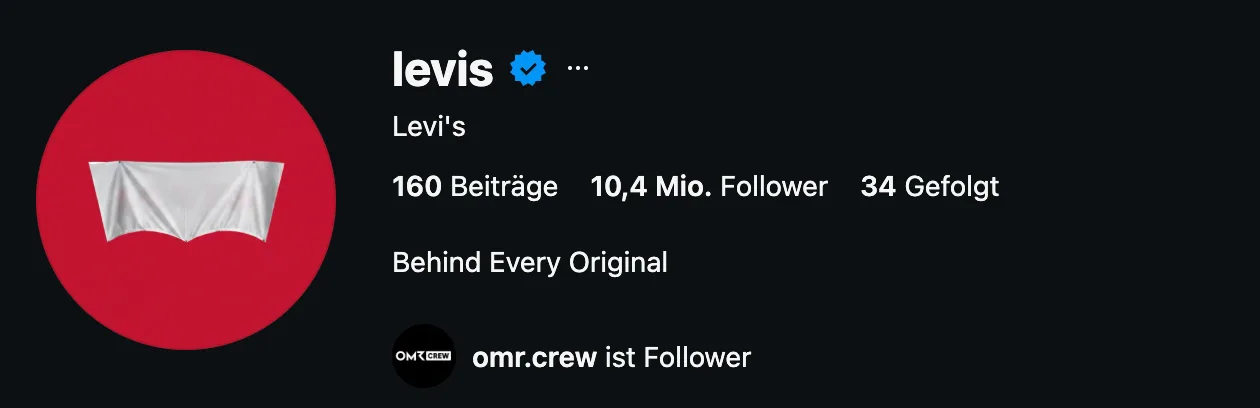
In no time, the video racked up more than 70 million views. Users called the move "Legendary Move" and "Advanced Marketing". Levi's then even changed the profile pictures of its social media channels to the covered version of its own logo. In Las Vegas, a truck with a digital billboard drove through the city. Once again it showed the covered brand logo, accompanied by the message: "Nothing to see here. #definitelynotlevis". And the story was far from over.
From Santa Clara to Boston
Shortly afterward, another brand chimed in. Gillette Stadium in Foxborough, Massachusetts, southwest of Boston, is also one of the World Cup venues. Here, too, FIFA removed the sponsor's name for the duration of the tournament. During the World Cup, the stadium is listed simply as "Boston Stadium".
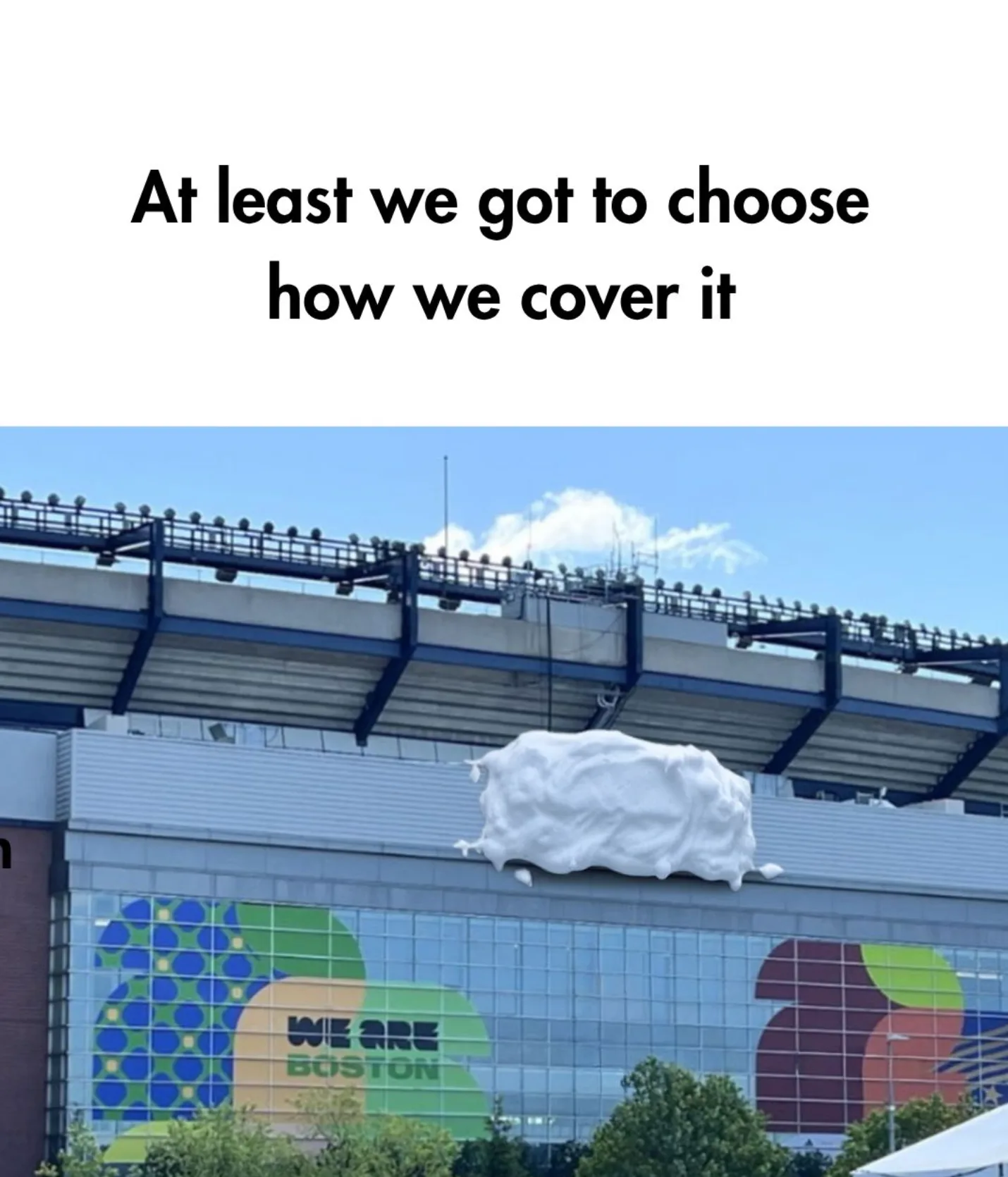
Gillette responded with humor. On Instagram, the brand posted an AI-generated image showing the stadium logo covered in shaving foam. The caption was aimed directly at Levi's:
"@levis they got us too"
Above the image it said:
"At least we got to choose what covered it."
Levi's replied publicly in the comments:
"Oh, so there are favorites."
Within a few hours, a back-and-forth developed between two brands that probably got far more attention than any traditional stadium advertising.
Even ketchup and Tabasco became part of the story
FIFA didn't limit its measures to stadium names. Products inside the stadiums were affected too.
Labels on Heinz ketchup and Tabasco sauces, for example, were taped over to prevent brand presence from non-official sponsors. The affected brands published their own posts and turned the taped-over products into a talking point themselves. FIFA's actual intention was to reduce visibility. Social media suddenly made the measures visible.
Jamal Musiala and the Beats headphones
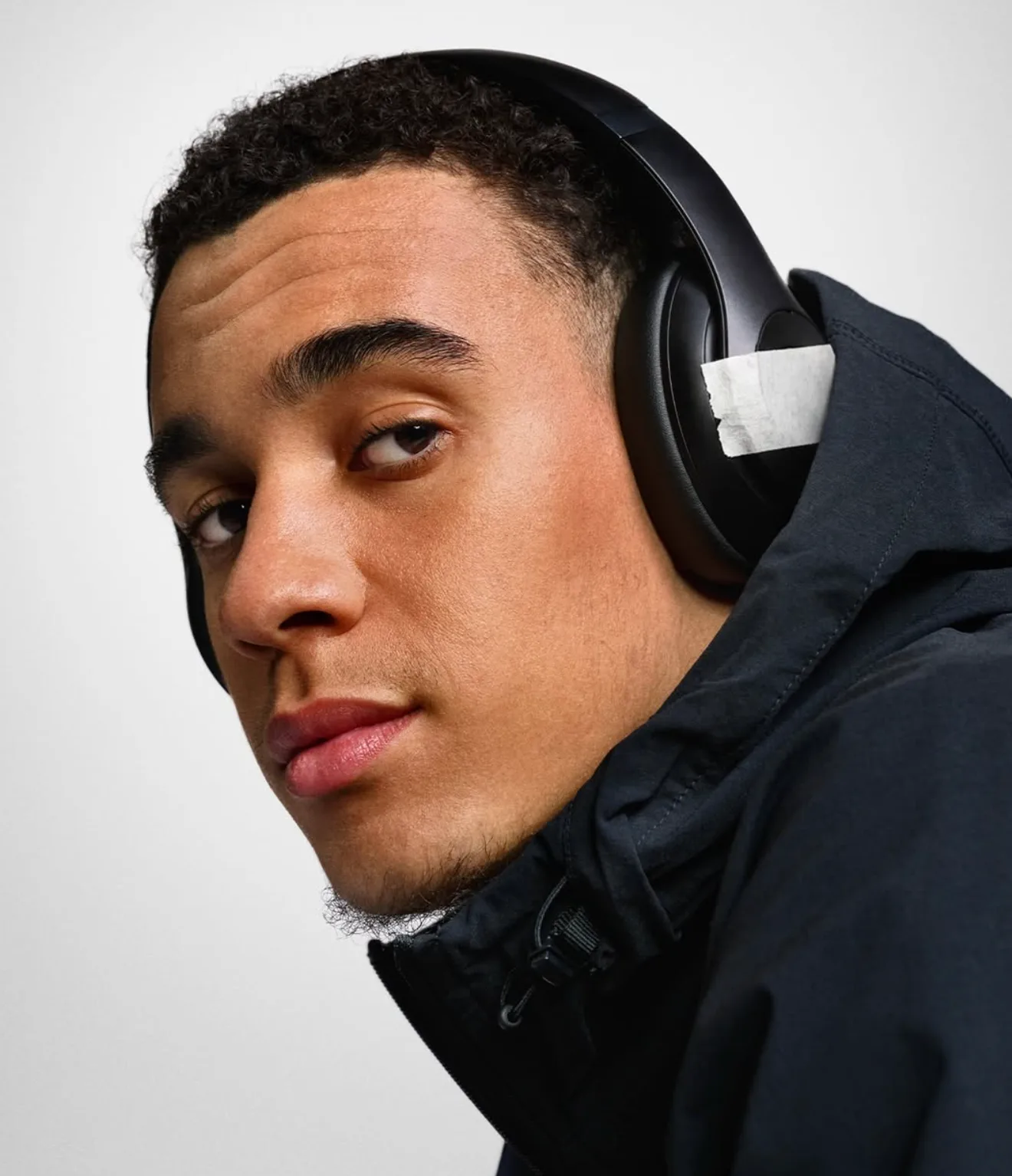
Things got especially interesting before the German national team's first group match. Jamal Musiala arrived at the stadium wearing his Beats headphones. The problem: Beats isn't one of FIFA's official partners. So the logo on the headphones had to be taped over.
Shortly afterward, Beats published the matching images on its own channels. For marketing experts, this moment felt familiar.
At previous World Cups, Beats repeatedly managed to generate enormous attention despite lacking sponsorship rights. The brand understood early on that cultural relevance can often be more valuable than official partnerships.
FIFA does everything right – and others still win
FIFA is acting perfectly logically. Companies invest enormous sums to become official sponsors of a World Cup. These investments are only attractive if they come with exclusive rights. Sponsors want to be visible, stand out from the competition and make sure their brand doesn't get lost among dozens of other logos.
The attention for Levi's or Gillette by no means implies that official sponsorship is losing importance. Quite the opposite.
Brands like Adidas, Coca-Cola, McDonald's and Check24 continue to invest considerable sums in campaigns, partnerships and ad placements around the World Cup. They benefit from global visibility, long-term brand presence and the official connection to the tournament.
The current examples show, however, that sponsorship alone is no guarantee of attention. While official partners plan their presence, other brands can suddenly capture a significant share of the public conversation through creative ideas and quick reactions.
What ambush marketing really means
The current examples around the World Cup recall a marketing principle that is by no means new. In the industry, it's called ambush marketing.
The term describes strategies in which companies benefit from the attention around a major event without having acquired official sponsorship rights. It's not necessarily about breaking rules. Often these campaigns stay within legal boundaries. The goal is rather to harness the public attention surrounding an event for your own brand.
That's exactly why organizers like FIFA invest enormous resources in protecting their sponsors. Official partners pay large sums for exclusivity. Ambush marketing puts this model to the test again and again, because creative brands find ways to become part of the public conversation without being on the sponsor list.
The current World Cup shows impressively how ambush marketing works in practice. Several brands are benefiting from the attention around the tournament without being on the list of official sponsors.
Why attention works differently today
For a long time, marketing was a visibility business. The more often people saw a brand, the more successful a campaign was. That logic still exists. At the same time, a second layer has developed. Today, people don't share ad space. They share stories.
A covered stadium logo is, at first, just a covered stadium logo. The moment a brand turns it into a story, the situation changes. The actual event becomes a conversation starter. People comment, react and forward the content to friends or colleagues.
The reach comes from the reaction to it, not from the ad space itself. Levi's didn't get a bigger ad space. The brand created a more interesting conversation starter.
The power of cultural relevance
The success of such campaigns doesn't depend on creativity alone, though. Levi's benefited from something many companies underestimate: cultural relevance.
The covered logo only worked because people recognized the brand instantly. The famous Batwing logo has long been one of the best-known trademarks in the world. Even covered, it remained identifiable.
You can observe this principle with other brands too. Nike is often recognized by the swoosh alone. McDonald's often needs nothing more than the golden arches. Apple even leaves out its own name entirely in many campaigns.
Strong brands have built recognition over years. This allows them to tell stories that other companies simply couldn't tell in the same way.
Beats also understood this principle early on. The brand became visible around major sporting events because it was part of the culture. Players wore the headphones voluntarily and fans recognized them immediately.
That's why the most successful brands of our time rarely just sell products. They create meaning.
Why reactions are often more successful than campaigns today
Another development can be observed particularly well in the current examples. None of the brands mentioned spent months preparing a World Cup campaign.
Levi's reacted to the renaming of the stadium. Gillette reacted to Levi's. Heinz and Tabasco reacted to FIFA's measures. The attention didn't come from a long-planned campaign, but from a situation.
This is often exactly what distinguishes modern social media marketing from traditional advertising. In the past, companies developed campaigns and then hoped for attention. Today, attention often already exists. Successful brands recognize these moments and become part of the conversation.
That doesn't mean strategic planning has become unimportant. It does mean, however, that companies also need to develop the ability to quickly make sense of current developments and respond to them.
Many of the most successful social media moments of recent years came about in exactly this way.
What companies can learn from this
The most important takeaway from the current World Cup examples has little to do with football. Companies should stop defining attention solely in terms of reach. Reach remains important. Visibility remains important. But on their own, they're less and less enough.
People engage with topics that surprise them, entertain them or make them think. They respond to brands that understand current developments and can put them into meaningful context. And that doesn't take million-dollar budgets. It takes an understanding of which conversations are already happening and what a brand can contribute to them. That's where many of today's most successful pieces of content are created.
How Matelify helps
Today, modern communication rarely fails because of content production. The harder part is spotting relevant topics early.
The Matelify Mates help companies keep an eye on current developments, industry trends and discussions. They help identify opportunities, put topics into context and derive content ideas from them that fit the respective brand and target audience.
Because the best content often doesn't come from the editorial calendar. It comes from companies recognizing the right moment.
Conclusion
The 2026 World Cup shows impressively how much marketing has changed. Levi's, Gillette, Heinz, Tabasco and Beats had something in common around the tournament: they weren't the most visible brands. They were the brands with the most interesting stories.
FIFA will continue to sell sponsorship rights in the future. Companies will keep paying for exclusive visibility. Little will change about that. What has changed, however, is the way attention is created.
People don't automatically talk about what they see. They talk about what they find interesting. And that's exactly where one of the biggest competitive advantages of modern brands lies today.